Skip to content

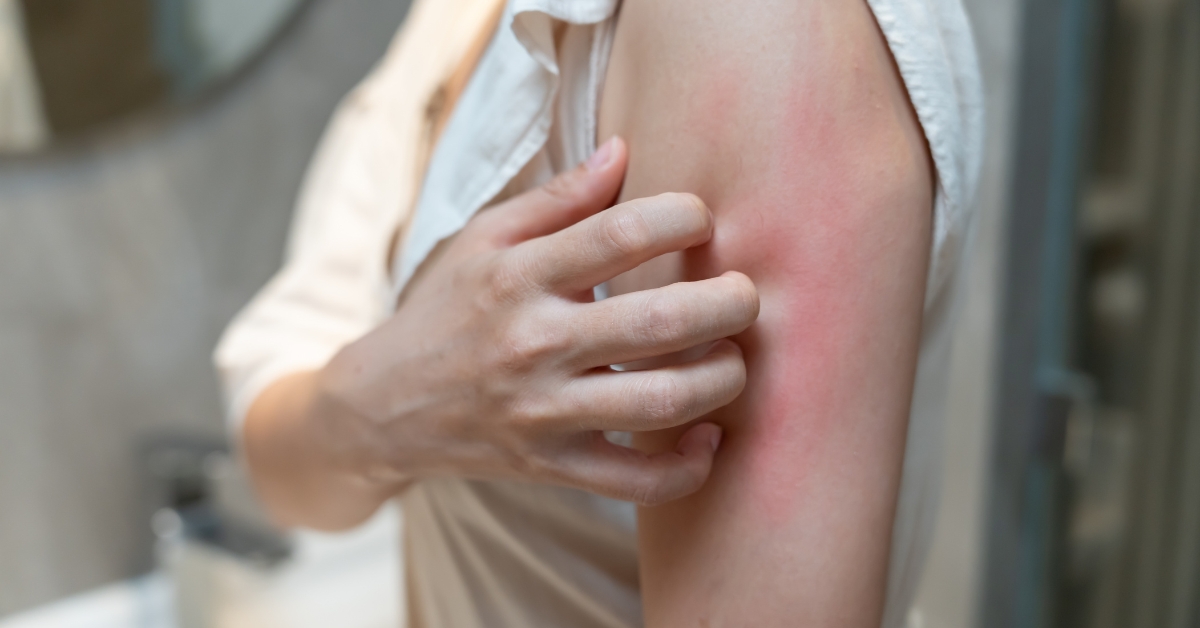
Itchy skin may not be the first symptom that comes to mind when thinking about menopause, but hormonal changes during perimenopause and menopause can affect the skin. As estrogen levels decline, the skin may become drier, thinner, and more sensitive to irritation, which can leave some women experiencing new or worsening itchiness.
While hormonal changes may contribute to itchy skin during menopause, they are not the only possible cause. Dry weather, skincare products, allergies, medications, and certain skin or medical conditions can produce similar symptoms. Understanding how menopause affects the skin can help you recognize when hormones may be one part of the picture and when persistent itching deserves further evaluation.
Why Can Menopause Cause Itchy Skin?
Estrogen plays a role in maintaining skin hydration, collagen production, and normal skin barrier function. During perimenopause and menopause, estrogen levels fluctuate and eventually decline, which can change the way the skin retains moisture.
As the skin becomes drier, it may also become more sensitive and prone to irritation. For some women, this results in itching, tightness, flaking, or increased sensitivity to products that may not have bothered their skin in the past.
These changes can develop gradually, so it may not always be obvious that menopause is contributing. Some women notice itchy skin alongside other changes in their hair, nails, or overall skin texture as they move through the menopause transition.
What Does Menopause-Related Itchy Skin Feel Like?
Menopause-related itchiness can vary considerably from person to person. Some women experience occasional areas of dry, irritated skin, while others notice itching across larger areas of the body.
Symptoms may include:
- Dry or tight-feeling skin
- Itching or irritation
- Flaky or rough patches
- Increased skin sensitivity
- Tingling or crawling sensations
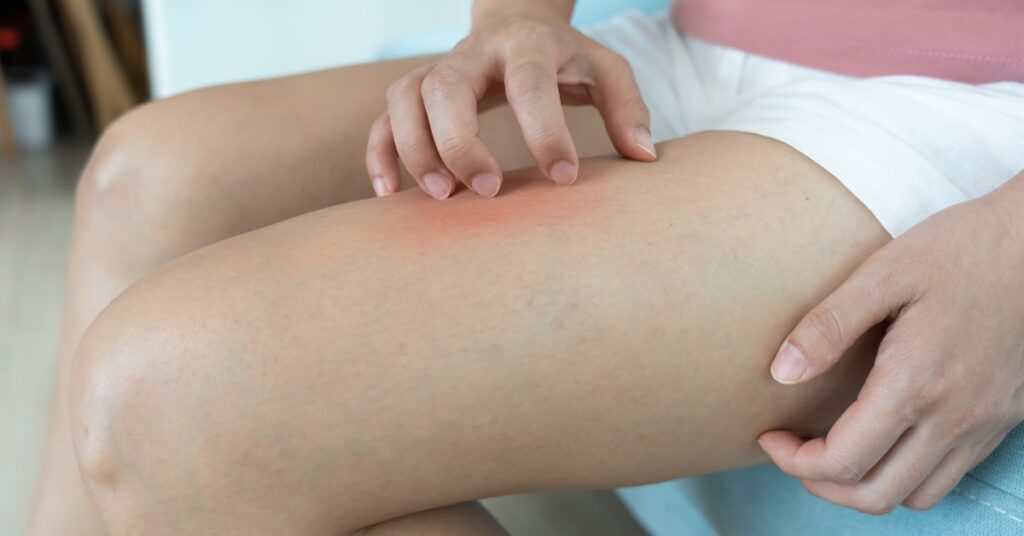
- Redness caused by irritation or scratching
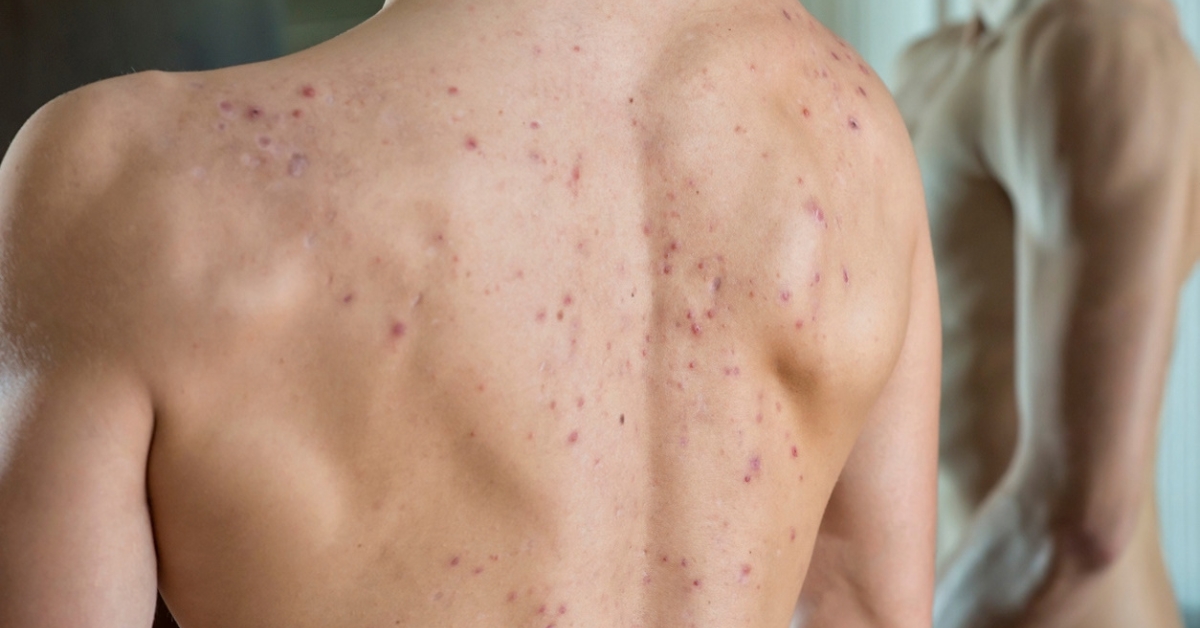
Itching may affect areas such as the face, arms, legs, chest, or back, although it can occur anywhere on the body. Symptoms may also feel more noticeable at certain times, particularly when the skin is dry or exposed to heat or irritating products.
Why Can Skin Become Drier During Menopause?
Changes in estrogen can affect the skin’s ability to maintain hydration. When the skin loses moisture more easily, its protective barrier may become less effective, leaving it more susceptible to dryness and irritation.
Natural changes in the skin that occur with age can contribute as well. This is why menopause-related skin concerns are rarely explained by hormones alone. Environmental conditions, hot showers, harsh soaps, fragranced skincare products, and certain medications may make already-sensitive skin feel even more uncomfortable.
Hot flashes and night sweats can also affect skin comfort for some women. Increased heat and perspiration may contribute to irritation, particularly when the skin is already dry or sensitive.
Other Menopause Symptoms That May Occur Alongside Itchy Skin
Skin changes may occur alongside other symptoms as hormone levels fluctuate during perimenopause and menopause. Looking at these symptoms together can provide a more complete picture of what may be changing.
Women experiencing itchy or dry skin may also notice:
Having several of these symptoms does not necessarily mean that hormones are responsible for every concern. However, discussing the overall pattern with a healthcare provider can help determine whether menopause may be contributing.
What Can Help Support Dry, Itchy Skin During Menopause?
Supporting the skin’s natural moisture barrier may help reduce some of the dryness and irritation associated with menopause. Simple changes to a daily skincare routine can sometimes make a meaningful difference in overall comfort.
Using a gentle, fragrance-free cleanser and regularly applying moisturizer can help support hydration. Hot showers and baths may make dry skin worse, so using warm rather than very hot water may also be beneficial. A humidifier can help when indoor air is particularly dry.
It is also worth paying attention to new products or environmental triggers. Fragrances, detergents, certain fabrics, and skincare ingredients may irritate sensitive skin even if they did not cause problems previously.
Can Hormone Therapy Support Menopause Symptoms?
For some women, provider-guided hormone therapy may be considered as part of an individualized menopause care plan. Treatment decisions depend on a person’s symptoms, health history, individual risk factors, and overall goals.
Hormone therapy should not be viewed as a specific or guaranteed treatment for itchy skin. Because itching can have many potential causes, persistent symptoms may require additional evaluation to determine whether hormonal changes, a skin condition, an irritant, or another health factor is contributing.
At Evolve, our providers look at symptoms and lab work together to understand the full picture rather than focusing on a single concern. When hormone therapy is appropriate, treatment is personalized and monitored based on each individual’s needs.
When To Speak With a Provider
Occasional dry or itchy skin is common, but persistent itching should not automatically be attributed to menopause. If the itching continues, becomes more severe, interferes with sleep or daily life, or is accompanied by a new rash or other unexplained symptoms, speak with a healthcare provider.
At Evolve, our providers take a personalized approach to menopause care by considering your symptoms, lab work, medical history, and overall health together. This can help determine whether hormonal changes may be contributing to what you’re experiencing and what care options may be appropriate.
Book a complimentary consultation to discuss your menopause symptoms and learn more about Evolve’s personalized, provider-guided approach to care.
Frequently Asked Questions
Can menopause cause itchy skin?
Yes. Hormonal changes during perimenopause and menopause may contribute to dry, itchy skin in some women. Declining estrogen can affect skin hydration and the skin barrier, making irritation more noticeable.
Why does my skin itch during menopause?
Declining estrogen levels may contribute to drier, more sensitive skin. However, allergies, skincare products, medications, environmental conditions, and skin conditions can also cause itching.
Where does menopause itching occur?
Itching can occur anywhere on the body. Some women may notice symptoms on their arms, legs, face, chest, or back, while others experience more generalized skin dryness and irritation.
Can perimenopause cause itchy skin?
Yes. Hormonal fluctuations begin during perimenopause, so changes in skin hydration and sensitivity may occur before menopause itself.
What helps itchy skin during menopause?
Regular moisturizing, gentle fragrance-free skincare products, avoiding very hot showers, and reducing exposure to known irritants may help support skin comfort. Persistent symptoms should be evaluated by a healthcare provider.
Can hormone therapy help with itchy skin?
Hormone therapy may be appropriate for certain women experiencing menopause symptoms, but it is not considered a guaranteed treatment for itchy skin. Treatment should be individualized based on symptoms, health history, and a provider’s evaluation.
When should I be concerned about itchy skin?
Talk with a healthcare provider if itching is persistent, severe, disrupting your sleep, accompanied by a new rash or signs of infection, or occurs with other unexplained symptoms. Itching has many possible causes, so ongoing symptoms should not automatically be assumed to be related to menopause.