
If you’ve ever been told your labs are “normal” but you still don’t feel like yourself, you’re not alone.
Many people experience symptoms like fatigue, weight gain, low libido, brain fog, or mood changes, even when their lab results fall within standard reference ranges. This can be frustrating, especially when you’re doing everything right but still not seeing or feeling improvement.
So what’s going on?
The answer often comes down to the difference between “normal” lab ranges and individualized hormone optimization.
Normal vs Optimal Hormone Levels Explained
Standard lab ranges are based on large population averages and are primarily used to identify disease, not necessarily to define what’s ideal for how you feel day to day. These ranges are broad by design, include individuals with varying levels of health, and don’t account for symptoms, lifestyle, or individual physiology.
Because of this, it’s possible to be “within range” and still experience symptoms. Hormones play a key role in metabolism, energy, mood, sleep, and body composition, so even small shifts within a normal range can impact how you feel.
You may experience symptoms such as:
- Persistent fatigue
- Difficulty losing weight
- Increased hunger or cravings
- Low libido
- Mood changes
- Poor sleep
To address this, some providers use clinical target ranges—levels that are interpreted alongside your symptoms, goals, and overall health. Rather than focusing on a single number, this approach looks at your full picture to guide more personalized care.
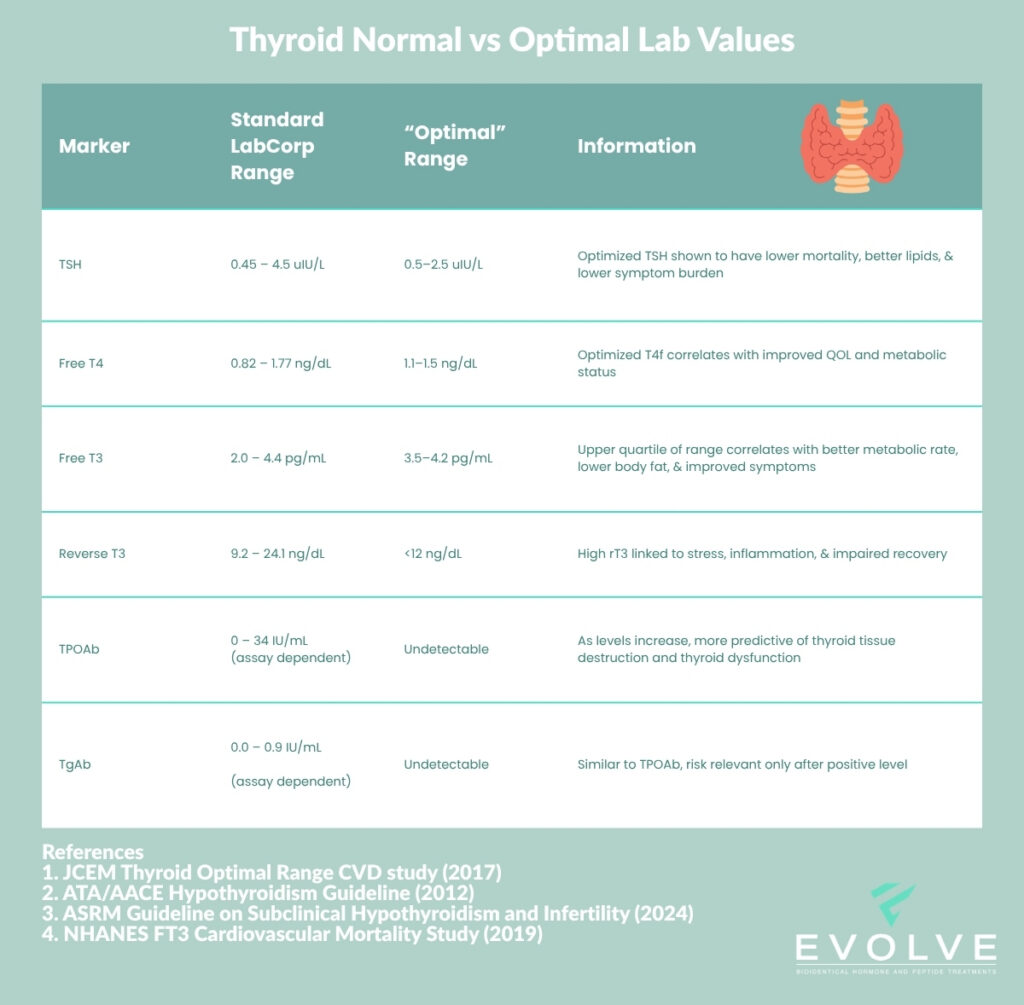
Thyroid Hormone Ranges: Standard vs Clinical Targets
The thyroid plays a major role in metabolism, energy, and weight regulation. Even subtle imbalances can affect how you feel day-to-day.
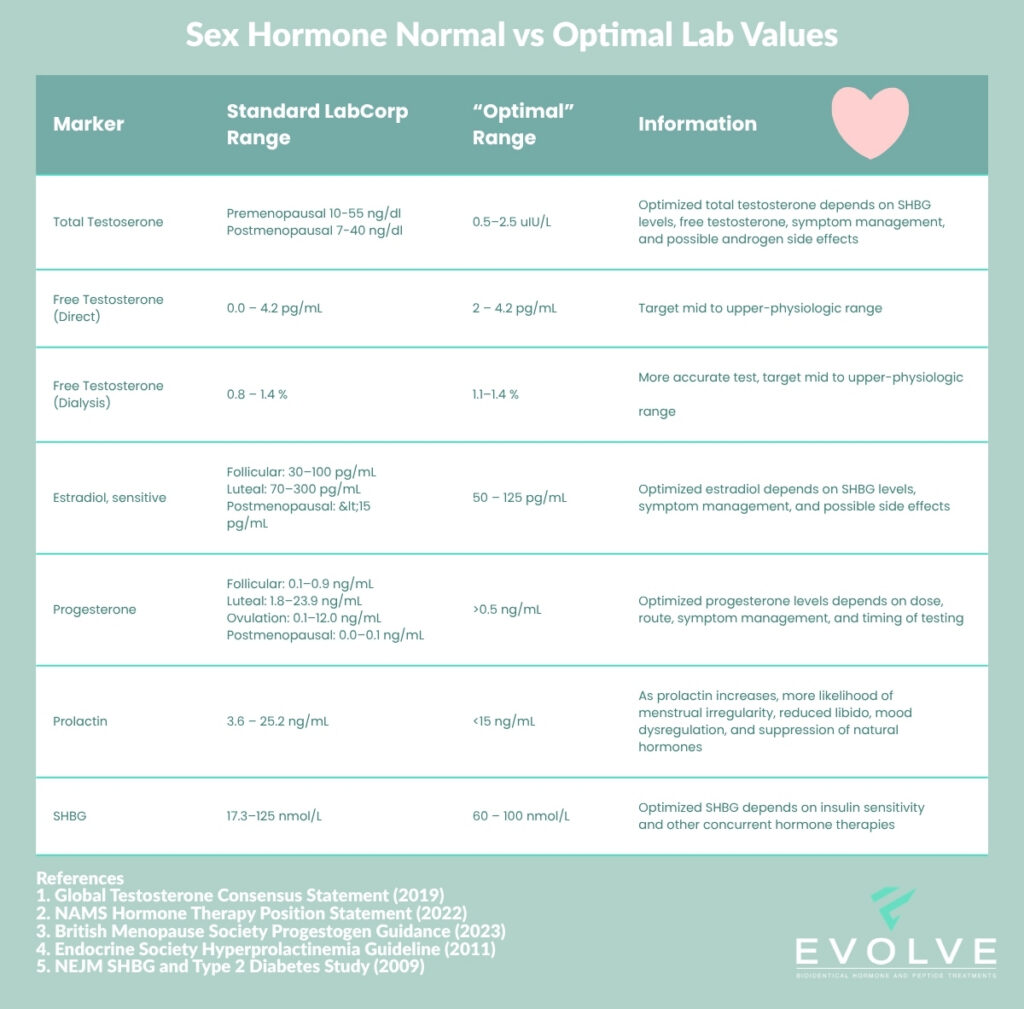
Sex Hormone Ranges: Standard vs Clinical Targets
Sex hormones like testosterone, estradiol, and progesterone influence everything from energy and mood to body composition and libido.
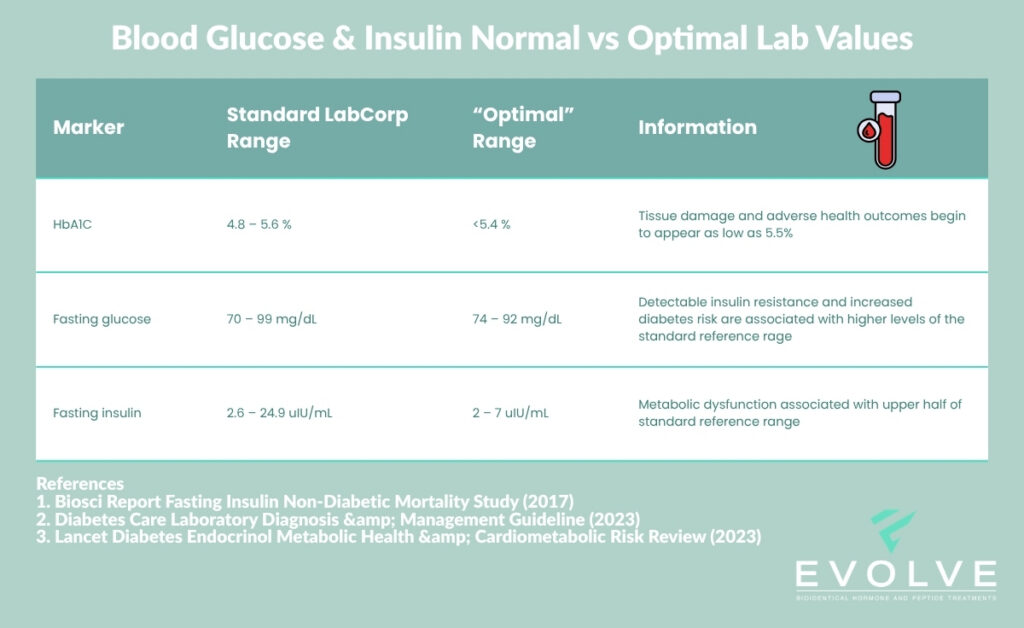
Blood Sugar & Insulin: Standard vs Clinical Targets
Hormones don’t just include thyroid and sex hormones, your metabolic hormones also play a critical role in how your body uses energy.
Why Personalized Hormone Care Matters
Hormone health isn’t just about lab numbers—it’s about how you feel day to day.
At Evolve, care is built around a personalized approach that includes comprehensive lab testing, symptom-based evaluation, and ongoing monitoring. This allows for more precise adjustments based on your individual needs, rather than relying on a one-size-fits-all model.
If you’re experiencing symptoms like low energy, difficulty losing weight, increased hunger, mood changes, brain fog, low libido, or poor sleep, your hormones may be playing a role, even if your labs fall within a normal range.
If you have questions about your hormone levels or symptoms you’ve been experiencing, the team at Evolve Telemedicine can help guide you through the evaluation process.
You can schedule a complimentary consultation to review your symptoms, discuss testing options, and determine the best next steps for your care, all in a confidential, no-pressure conversation designed to help you feel informed and supported.
*This content is for informational and educational purposes only and is not intended as medical advice. Hormone levels and lab ranges can vary based on individual health status, age, and testing methods. Treatment decisions should always be made in consultation with a qualified healthcare provider.